Progression that survives real life.
GainWagon is a gym tracker that tells you what to lift. One number per lift and rep scheme, moved by what you just lifted, and that is the whole engine.
Good weeks are easy. It also knows what to do after a flu, three weeks off, or a gym without the right plates.
Web today. The iOS and Android apps are coming, and your account carries over.
One month free · cancel anytime
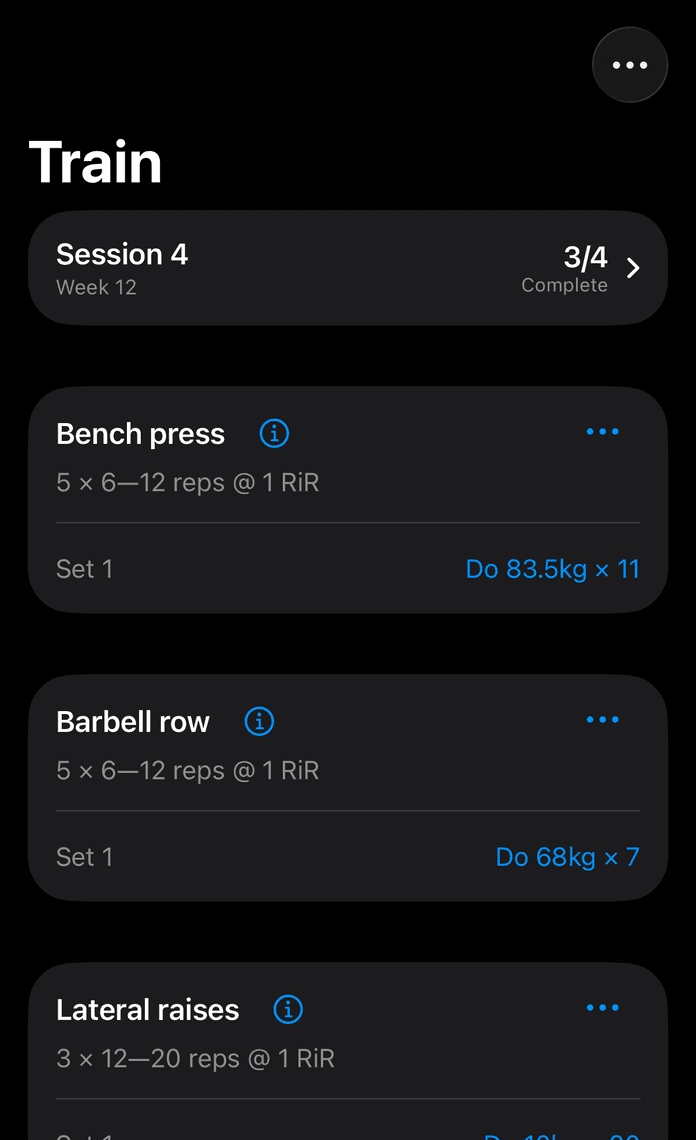
Every program works until the week goes wrong
Twenty-five squat sessions. A flu, three weeks away, and the lifter still finished 6% up. Nothing here was hand-edited.
The lifter is made up. The numbers are not.
It has been here before
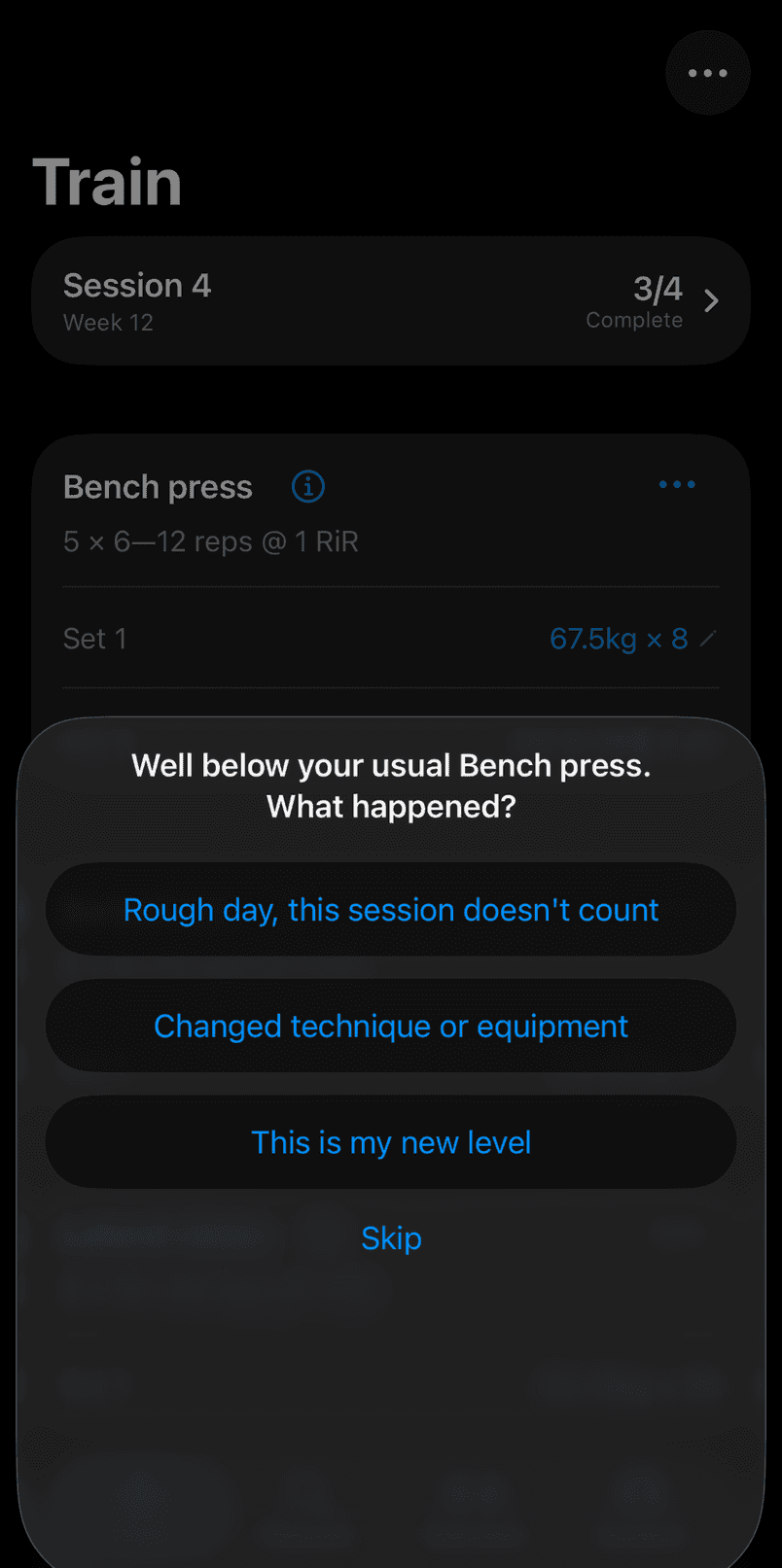
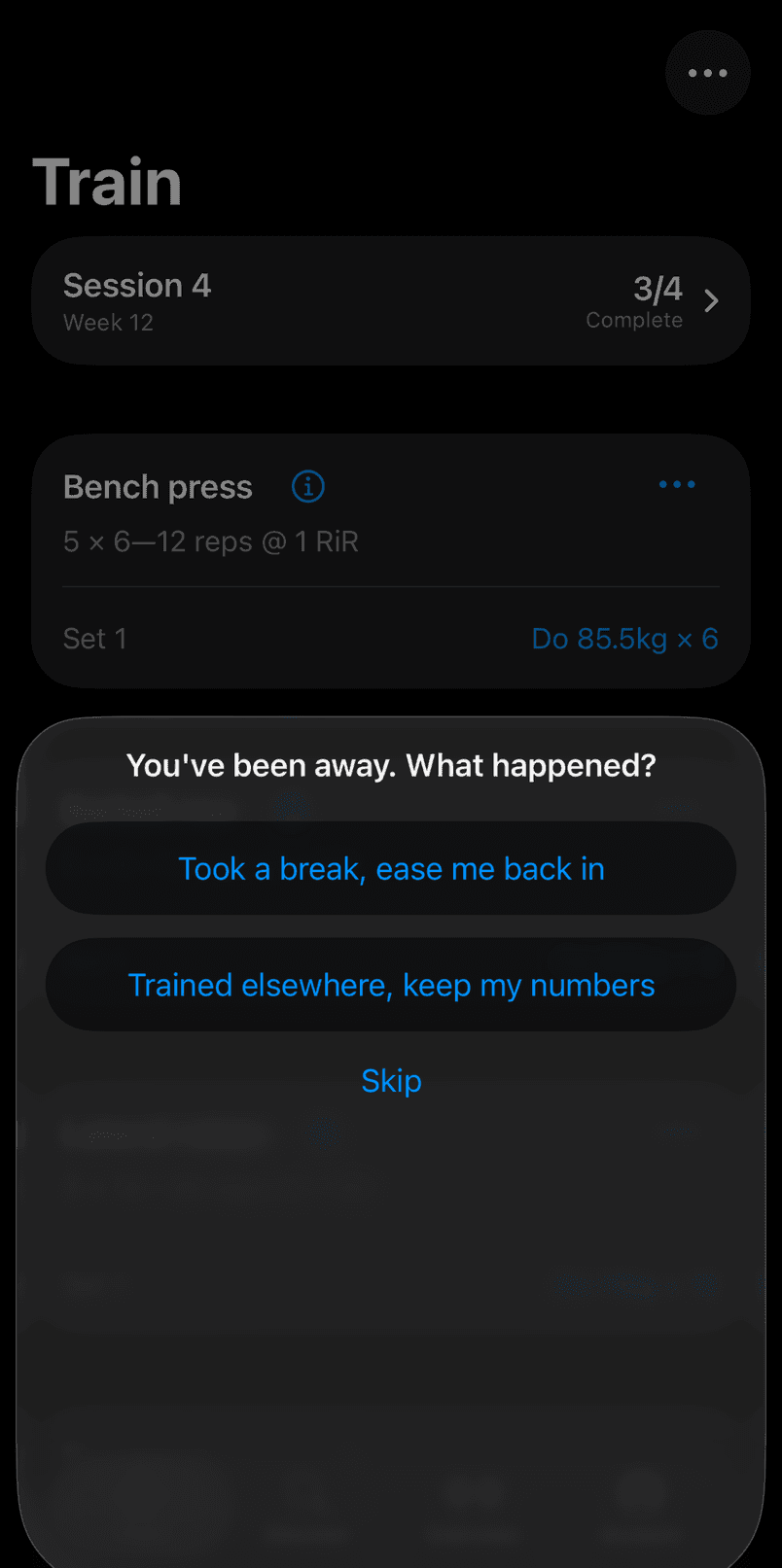
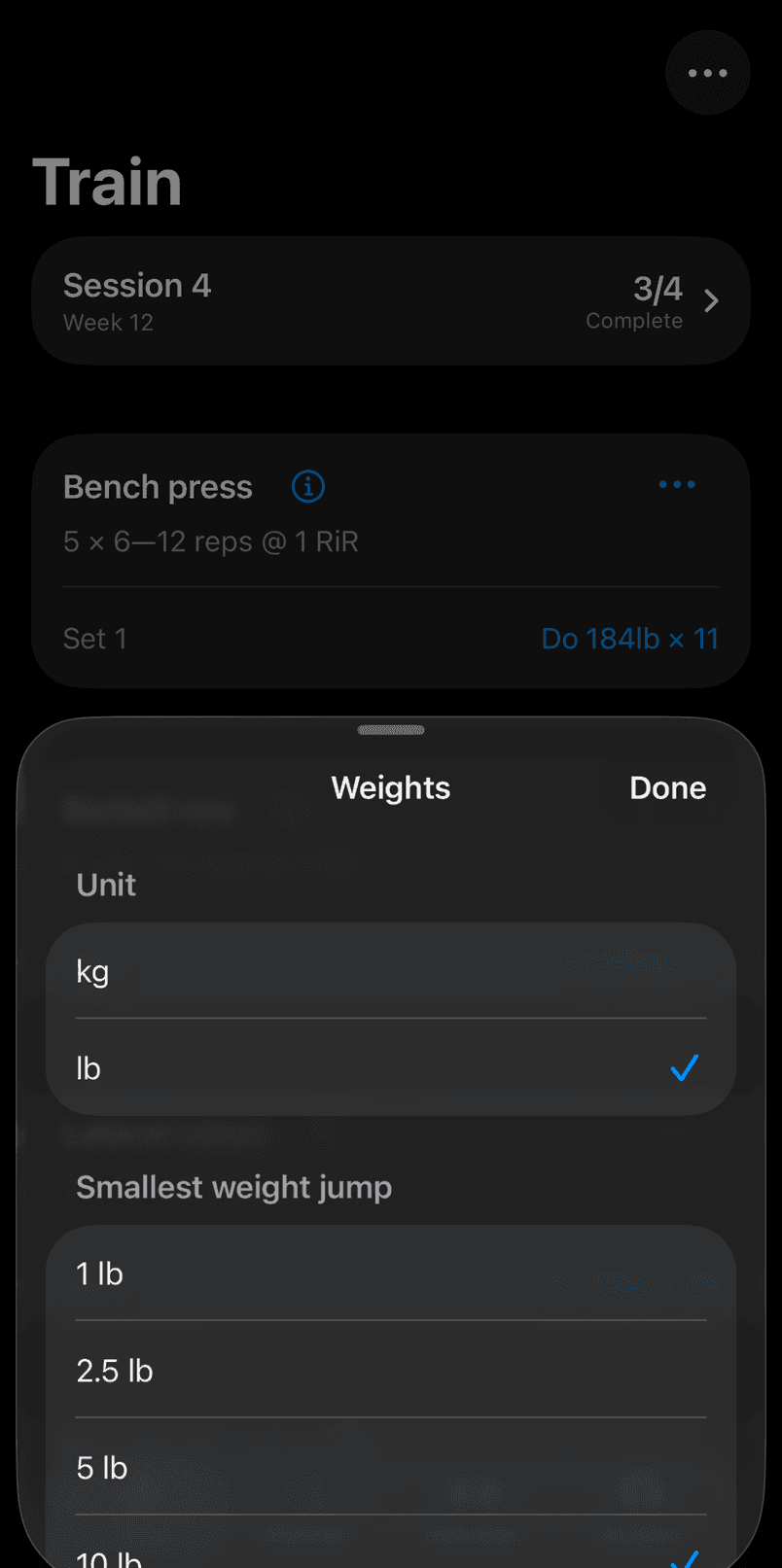
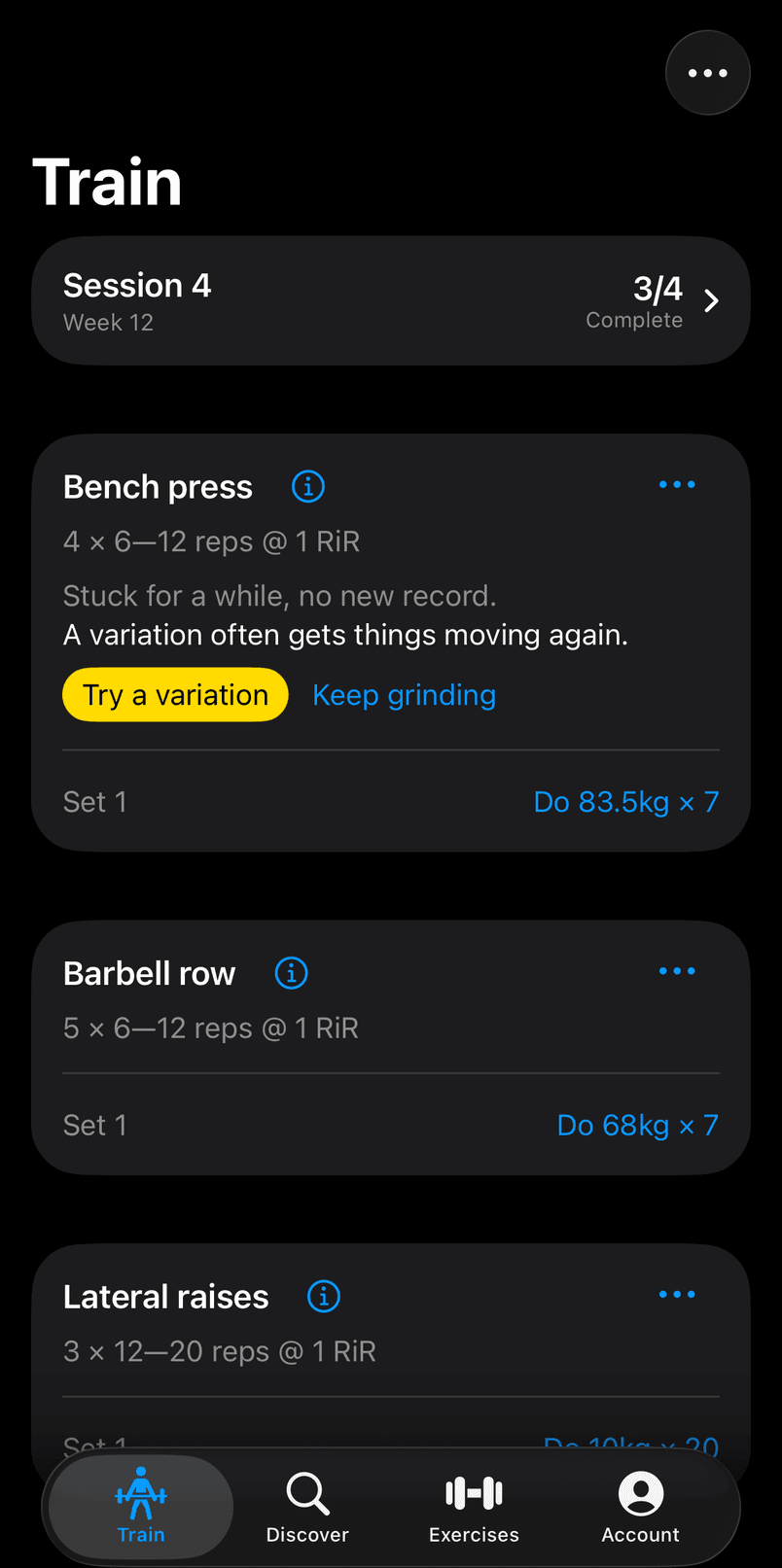
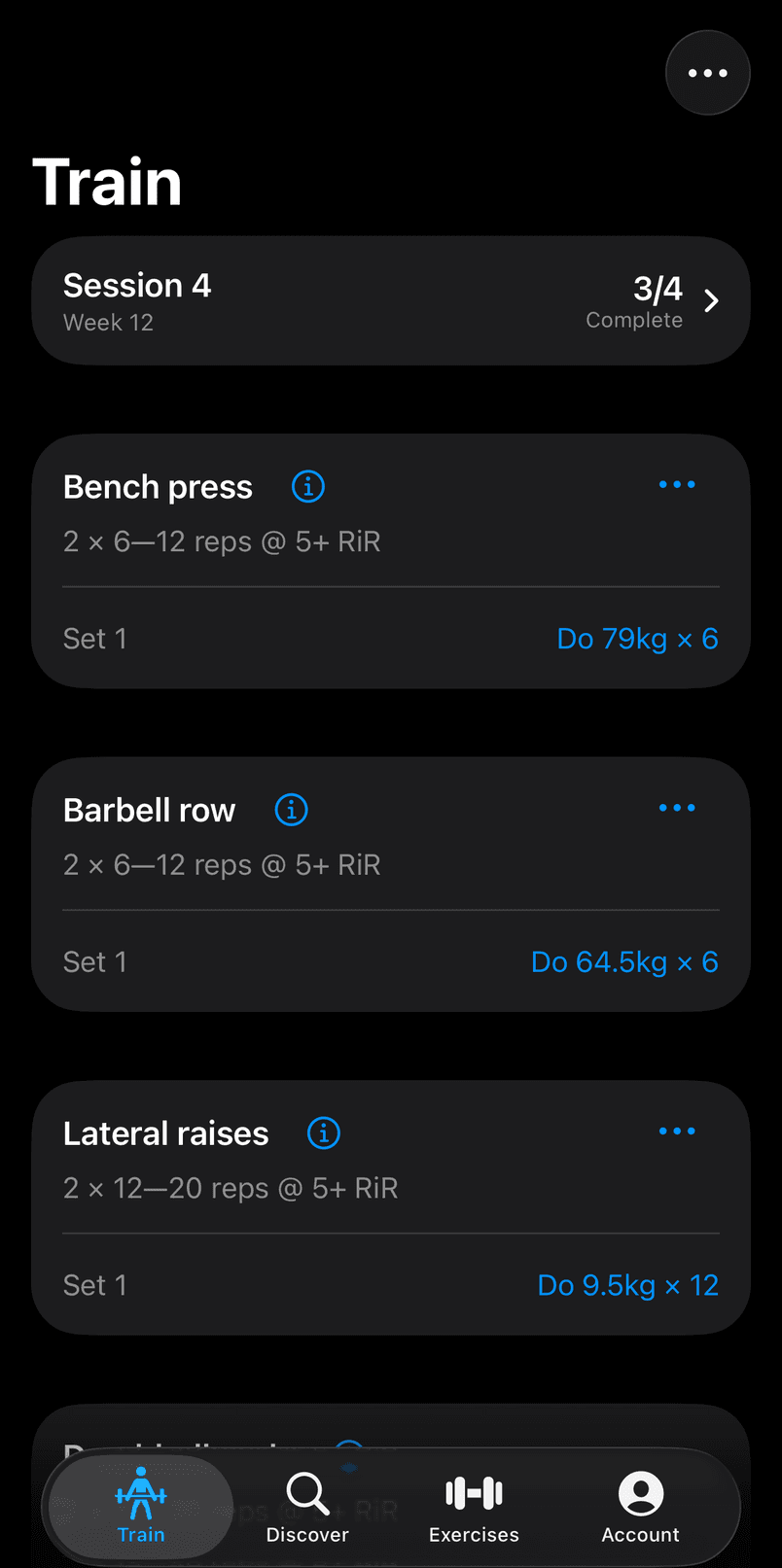
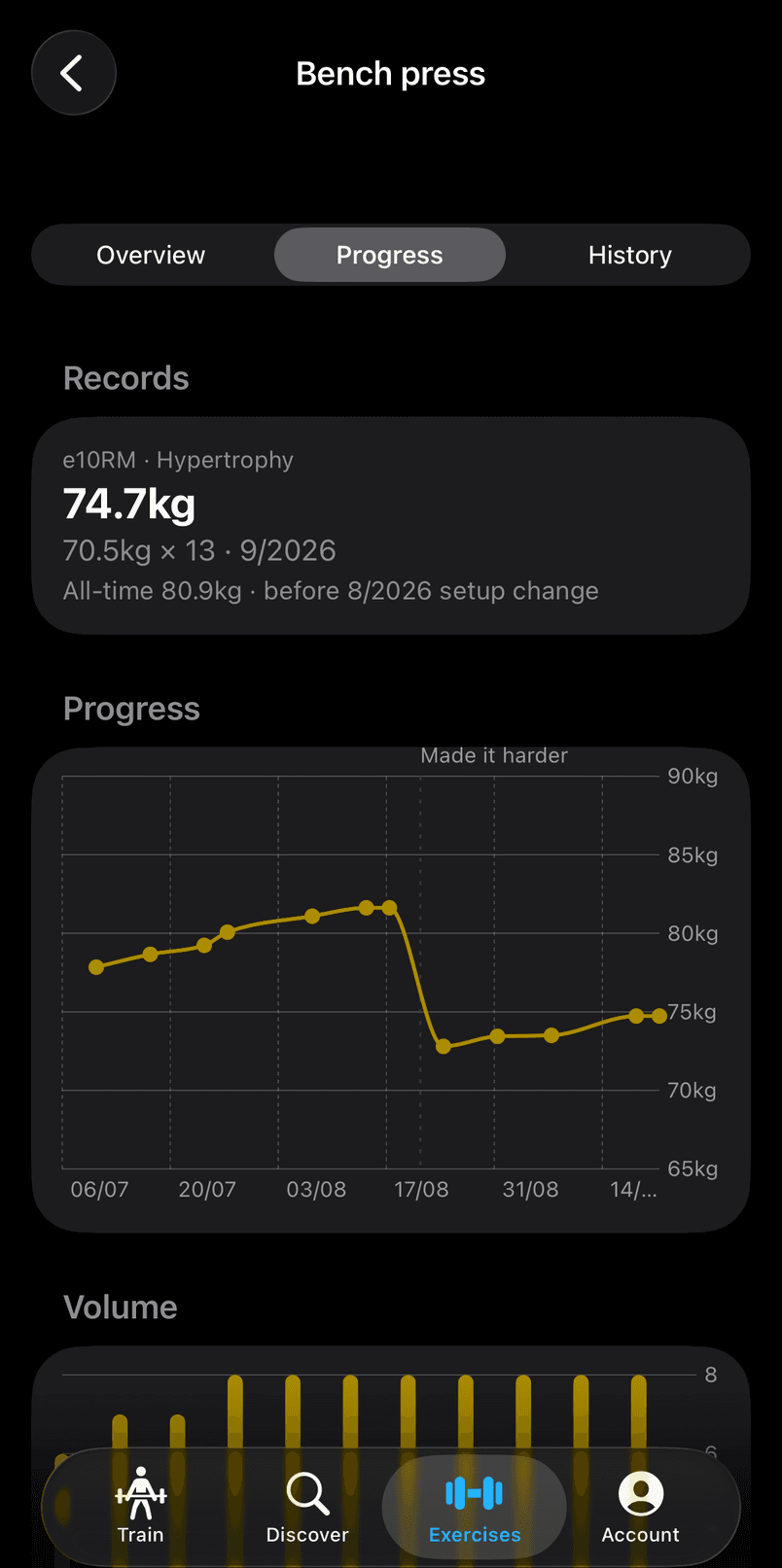
One number per lift, and one question at the end
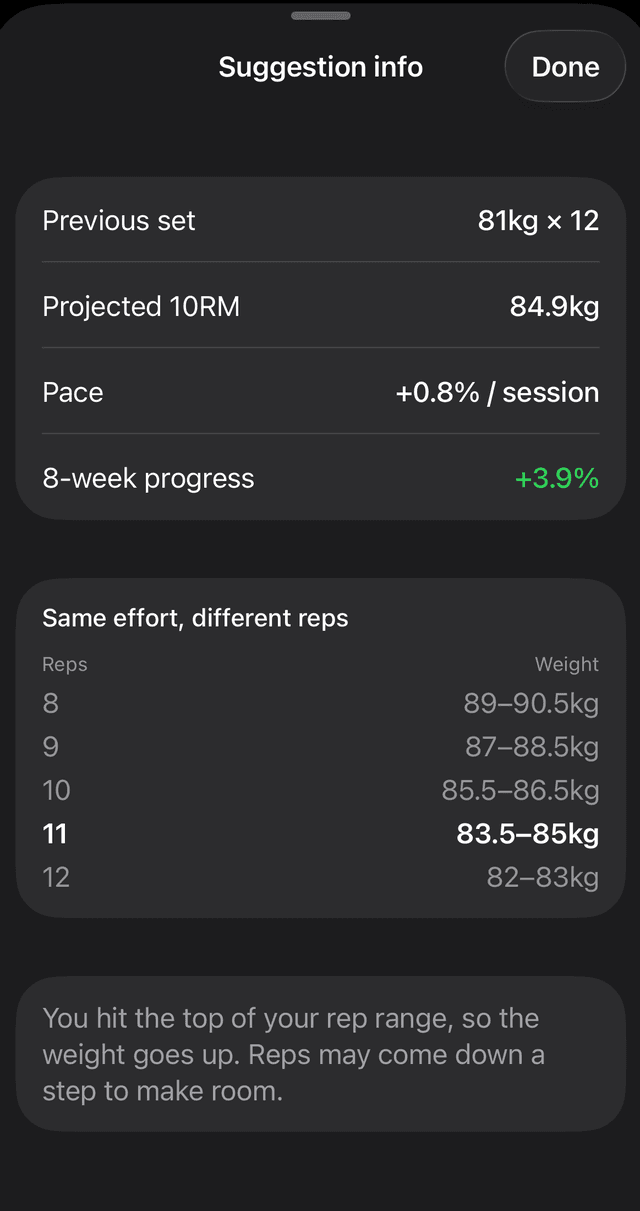
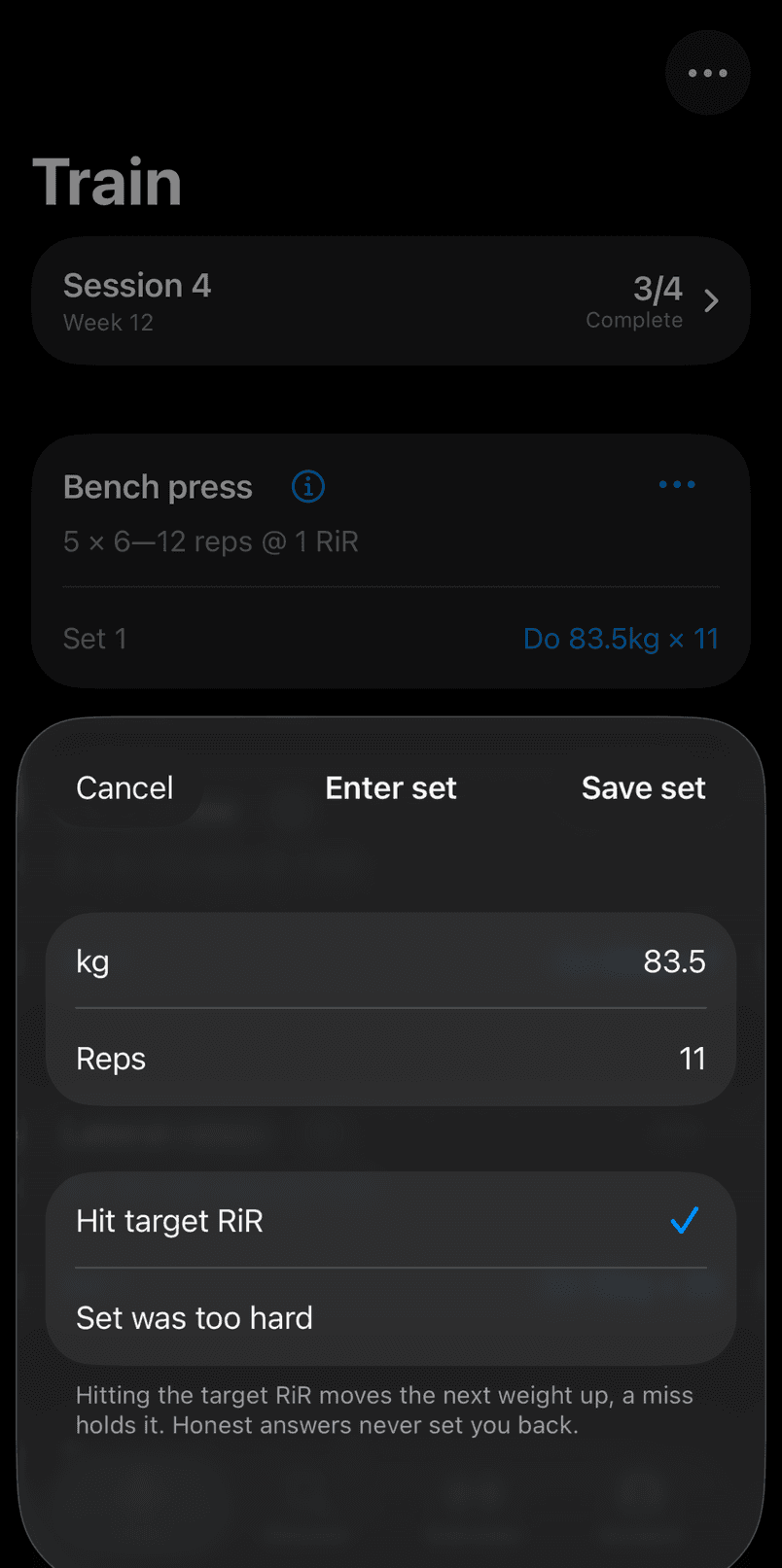
Every lift has one number behind it for each rep scheme you train it at, a projected max: the heaviest you could manage today at the reps that lift is aimed at. A single for strength, ten for muscle. It comes from one set of as many reps as you can on day one, and everything below is what moves it.
- Hit the target
- it climbs, up to about 1% a session
- Beat it
- it climbs faster
- Grind it out
- it holds, and the climb slows
- Fall short on reps
- a strike (a counted miss): the number holds, and the climb slows more
- Three strikes
- a deload, 10% off for strength and 5% for muscle, then a lighter session
Nothing it decides is locked. Log what you actually lifted and it works from that.
The evidence, and the guesses
The same rules run every plan. No training phases you never chose, no settings working behind your back.
A trained lifter's tested max usually differs by about 3% between two tests a few days apart (Grgic 2020, systematic review). So a 5% drop right after a clean session is a question, not a deload.
A calorie deficit slows muscle gain (Murphy and Koehler 2022). So losing fat halves the hypertrophy pace. Strength keeps its pace: the evidence there is thin, so that part is our call.
Every constant says what backs it, and the ones we had to guess are labelled heuristic. The size of a deload is a heuristic, and we say so.
Your program or ours
Ours
Seven to run as they are: Upper/Lower, GZCLP+, Push/Pull/Legs, Full Body, Starting Strength+, and two glutes-led splits.
Or yours
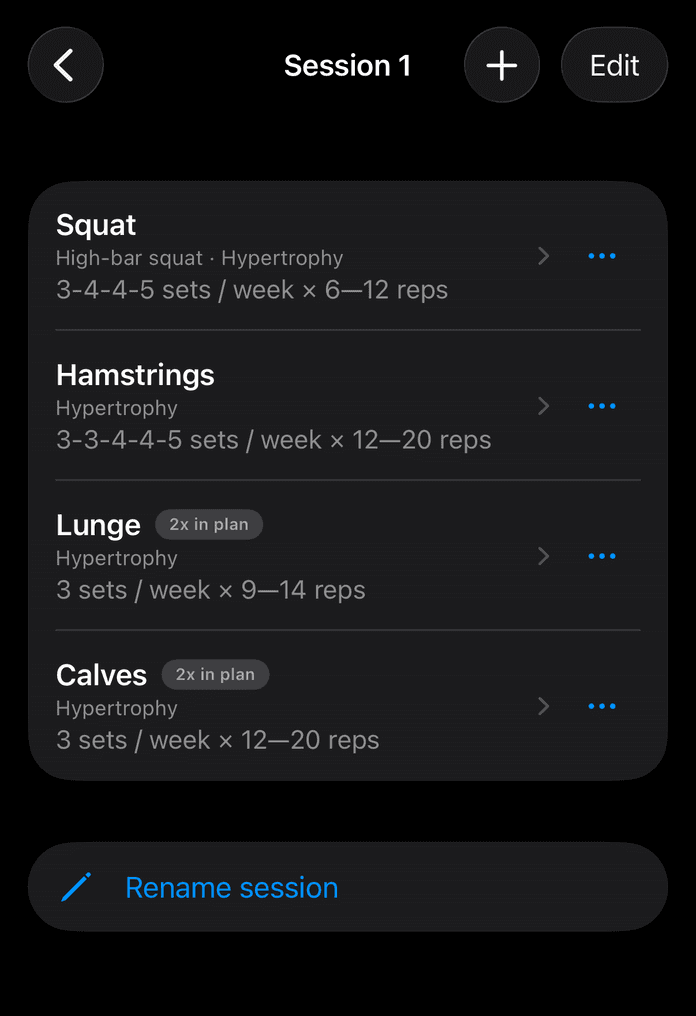
Build your own: goal per exercise, rep ranges, the week cycle, how the sets build up. The engine runs yours exactly as it runs ours. Share it with a link, and a partner runs it on their own numbers.
Simple pricing. Full access.
No tiers, no locked features, no surprises. Trackers are cheap because logging is cheap: you pay for the part that decides. The yearly is a discount for committing, not a penalty for not.
Monthly
- The engine, every rule published
- Every template and the editor
- Records and strength charts for every lift
- 278 exercises, all described, videos on the main lifts
- One month free
- Cancel anytime
Yearly
- Everything in Monthly
- One payment a year instead of twelve